
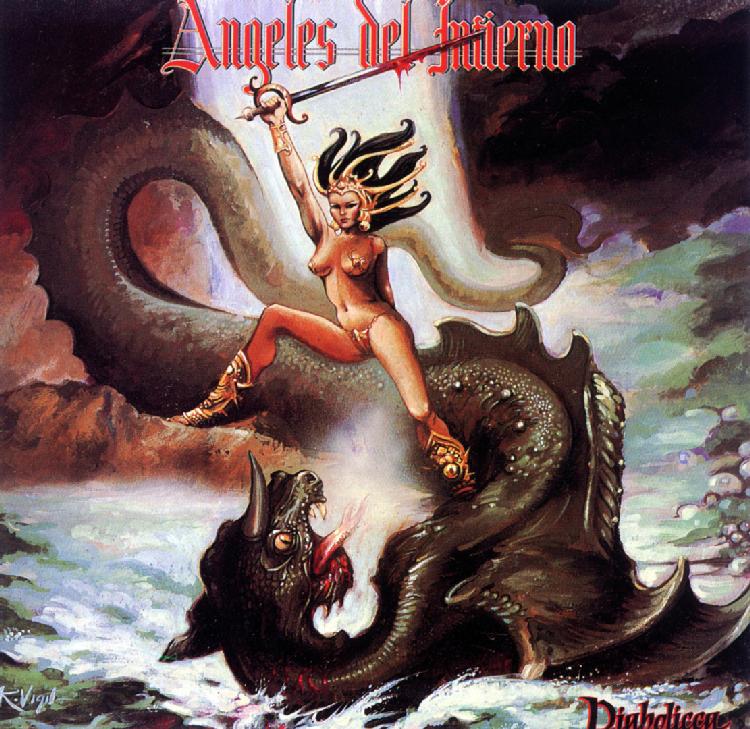
Diabolicca
Guitarra solista: Robert Alvarez
Guitarra rítmica: Manu Garcia
Bajo: Santi Rubio
Bateria: Iñaki Munita
Producción: Claxon para WEA España
Ingenieros: Brad Davis / Dennis Herman
Ilustración y diseño: Rufino Vigil
Grabado en Mediterráneo Estudios de Ibiza
(Febrero/Marzo 85)
How International Casino Options Evolved for Canadian Players, per Casizoid
The landscape of online gambling in Canada has undergone a significant transformation over the past two decades. Unlike countries with centralized federal gambling legislation, Canada operates under a fragmented regulatory model where provinces hold jurisdiction over gaming activities. This structural reality meant that for much of the early internet era, Canadian players existed in a legal grey zone — technically permitted to gamble online but with few domestically licensed operators to choose from. That gap created the conditions for a robust offshore market to take hold, and understanding how that market evolved requires looking at both the regulatory history and the technological shifts that shaped player behavior across the country.
The Regulatory Framework That Shaped Offshore Demand
Canada’s Criminal Code, specifically sections 207 and 206, has historically governed gambling at the federal level, granting provinces the authority to conduct and manage gaming within their borders. For years, this was interpreted to mean that only provincially operated platforms — such as those run by the British Columbia Lottery Corporation or the Ontario Lottery and Gaming Corporation — could legally offer online casino services to residents. Private operators, whether domestic or foreign, were not permitted to offer services directly to Canadians under this reading of the law.
This created an unusual situation through the 2000s and into the 2010s. Millions of Canadians were accessing offshore platforms licensed in jurisdictions like Malta, Gibraltar, Kahnawake, and Antigua and Barbuda, but no meaningful enforcement action was taken against individual players. The Kahnawake Gaming Commission, established in 1996 by the Mohawk Territory of Kahnawake in Quebec, became one of the earliest and most prominent licensing bodies serving Canadian-facing operators, issuing licenses to dozens of platforms throughout the early internet gambling era. This quasi-domestic licensing structure gave many Canadian players a degree of confidence in the offshore market, even as the broader legal situation remained ambiguous.
The turning point came with Ontario’s decision to open a regulated private market. In April 2022, Ontario launched iGaming Ontario, a subsidiary of the Alcohol and Gaming Commission of Ontario, which allowed private operators to apply for registration and legally serve Ontario residents. This was a landmark shift — the first time a Canadian province explicitly welcomed private, commercially operated online casinos into a licensed framework. Within the first year, over 70 operators had registered, and the market generated more than CAD 1.6 billion in gross gaming revenue by the end of fiscal year 2022–2023, according to iGaming Ontario’s published reports.
How Offshore Platforms Adapted to the Canadian Market
Before Ontario’s regulatory shift, offshore operators had spent years refining their approach to Canadian players. Currency support was an early differentiator — platforms that accepted Canadian dollars rather than requiring conversion to USD or EUR gained a measurable advantage in player retention. Payment processing was another critical factor. The rise of e-wallets like Neteller and Skrill in the early 2000s gave Canadian players reliable deposit and withdrawal methods that bypassed the reluctance of Canadian banks to process gambling transactions directly.
Operators also adapted their game libraries to reflect Canadian preferences. Research consistently showed that Canadian players had strong engagement with slot titles, live dealer games, and certain table game variants, particularly blackjack. Software providers like Microgaming, which was founded in 1994 and is widely credited with launching the first true online casino, built long-standing relationships with Canadian-facing operators. By the mid-2010s, the catalog available to Canadian players through offshore platforms was often broader than what provincial lottery sites offered, which reinforced the appeal of the offshore market.
Review and aggregation platforms played a role in structuring this market as well. Sites dedicated to evaluating offshore platforms helped Canadian players navigate licensing credentials, payout speeds, and game variety. Casizoid is one example of a platform that has worked to provide structured information about offshore and licensed options available to Canadian players, helping users assess factors like regulatory standing and software quality rather than relying on operator marketing alone. The existence of such resources reflects how mature the information ecosystem around offshore gambling had become by the early 2020s.
The range of international casino options available to Canadians expanded considerably as more jurisdictions developed credible licensing frameworks. The Malta Gaming Authority, which replaced the earlier Lotteries and Gaming Authority in 2015, became one of the most recognized regulators for operators serving Canadian players, in part because its licensing requirements included player fund segregation, responsible gambling tools, and regular auditing by independent testing laboratories like eCOGRA and iTech Labs. Players and reviewers alike began treating MGA licensing as a meaningful quality signal rather than a formality.
Provincial Divergence and Its Effects on Player Behavior
Ontario’s 2022 regulatory shift did not immediately resolve the complexity facing Canadian players in other provinces. British Columbia, Quebec, Alberta, and Manitoba each operate provincial online gambling platforms, but none had followed Ontario’s lead in licensing private operators as of mid-2024. This means that a player in Vancouver faces a materially different set of legal and practical circumstances than a player in Toronto, even though both are accessing the same internet infrastructure.
British Columbia’s PlayNow platform, operated by BCLC, has expanded its game library over time and introduced live dealer content, but it remains a single-operator environment. Quebec’s Espace-jeux has faced criticism for a relatively limited selection compared to offshore alternatives. These constraints have kept offshore platforms relevant even as the domestic market has grown. Players in provinces without private licensing frameworks continue to access offshore operators, and the absence of enforcement against individual users means this behavior carries minimal legal risk in practice.
The data supports this continued bifurcation. A 2023 report by the Canadian Gaming Association estimated that a significant share of Canadian online gambling activity still occurs on unregulated platforms, even in Ontario where a licensed private market exists. The reasons are varied — some players prefer operators not registered with iGaming Ontario because those platforms offer higher deposit bonuses or fewer identity verification requirements. Others simply have existing relationships with offshore operators established years before the Ontario market opened.
Casizoid has noted in its coverage of the Canadian market that player preferences often reflect a combination of practical factors — withdrawal speed, payment method availability, bonus structures — rather than regulatory jurisdiction alone. This reflects a broader pattern in regulated gambling markets globally: the existence of a licensed domestic option does not automatically redirect all player activity away from offshore platforms, particularly when offshore operators have years of brand recognition and user experience investment behind them.
Technology’s Role in Expanding Access and Expectations
Technological development has been as consequential as regulation in shaping how Canadian players engage with offshore platforms. Mobile gambling adoption accelerated sharply after 2012, when smartphone penetration in Canada crossed 50 percent. Operators that had built desktop-first platforms scrambled to develop responsive mobile experiences, and by 2018, mobile accounted for the majority of online casino sessions across most major operators serving Canadian players.
Live dealer technology represented another inflection point. Early live casino products, introduced around 2006 by companies like Evolution Gaming and Playtech, were limited by bandwidth constraints and produced unreliable streaming quality. By the early 2010s, improvements in video compression and broadband infrastructure made live dealer blackjack, roulette, and baccarat genuinely competitive with the experience of visiting a physical casino. For Canadian players in regions without convenient access to land-based casinos — which describes a large portion of the country’s geography — live dealer games filled a meaningful experiential gap.
Cryptocurrency integration became a notable development through the late 2010s and into the 2020s. A subset of offshore operators began accepting Bitcoin and other cryptocurrencies as deposit methods, appealing to players who wanted faster transactions and greater privacy. This trend intersected with the banking friction that some Canadian players experienced when attempting to fund accounts at offshore platforms. While cryptocurrency gambling remains a niche within the broader market, its growth reflects the ongoing tension between player demand for frictionless access and the compliance requirements that licensed operators must meet.
Casizoid’s analysis of the Canadian market has highlighted how these technological shifts compound over time — each wave of innovation raises player expectations, which in turn pressures both offshore operators and provincial platforms to improve. The provincial platforms, constrained by government procurement processes and public accountability requirements, have generally been slower to adopt new technologies than their offshore counterparts, which has sustained the competitive appeal of the offshore sector even as domestic options have improved.
The evolution of online gambling access for Canadian players is ultimately a story about the interaction between regulatory fragmentation, market demand, and technological change. The offshore market did not emerge because Canadians were seeking to circumvent the law — it emerged because provincial platforms were slow to develop and the legal framework left a substantial gap that commercially motivated operators were positioned to fill. Ontario’s 2022 regulatory reform represents the most significant attempt yet to bring that offshore activity into a licensed framework, but the persistence of offshore engagement in both Ontario and other provinces suggests that regulatory solutions alone are insufficient. Player behavior is shaped by product quality, payment convenience, and accumulated trust, all of which offshore operators have had decades to develop. Understanding that history is essential for anyone trying to make sense of where the Canadian online gambling market stands today and where it is likely to go.